Recently, the paper titled "Chinese economists and the Nobel Prize: cultural bias or paradigmatic misalignment between theory and application?", co-authored by Professor Miao-jie Yu of Liaoning University and Professor Tariq H. Malik of Liaoning University, was officially accepted for publication in the international journal Applied Economics.
Paper Abstract:
Chinese economists produce a vast and increasingly high-quality body of research, yet no mainland Chinese scholar has won the Nobel Memorial Prize in Economic Sciences. Existing explanations (cultural bias or insufficient theoretical depth) remain incomplete. This paper integrates Bourdieu's field theory and Merton's theory of the normative structure of science to operationalize three dimensions aligned with Nobel Prize selection: Nobel Research Questions (NQ – fundamental questions that build theoretical value), Nobel Research Context (NC – abstract, transnational research frameworks), and Nobel Research Timing (NT – establishing early research positioning within forefront academic debates). Analyzing a sample of 2,604 papers published in Economic Research from 2000 to 2019, using textual and metadata evidence, this study examines the distribution of research question types, analytical levels, and their evolution over time.
The results indicate that domestic economics research is structurally dominated by applied "how-to" questions and often confined to a domestic context (firm/industry/national level). While empirical methods in this research have matured, this focus constrains its recognition for academic universality. Research aligning with Nobel Prize selection criteria is concentrated in only a few subfields (notably econometrics, institutional economics, and financial economics), though its proportion has gradually increased over time, with more significant growth observed after 2013.
These patterns suggest that the lack of full recognition by the Nobel Prize for Chinese economics research stems not only from external barriers in the academic evaluation system but also is closely related to the academic symbolic visibility shaped by domestic research orientations. The NQ-NC-NT analytical framework constructed in this paper clarifies the areas where Chinese economics research aligns with Nobel Prize selection criteria and identifies two key directions for effort: transforming the value of policy research into universally applicable academic contributions and accumulating international academic capital. Finally, the paper discusses the framework's implications for journal strategies, the construction of academic collaboration networks, and talent cultivation systems emphasizing abstract thinking.
Journal Introduction:
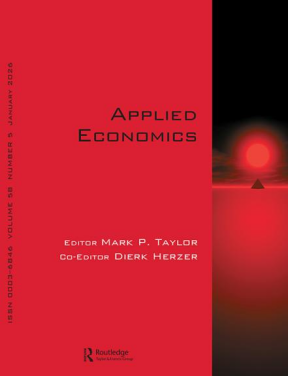
Founded in 1969, Applied Economics is an international scholarly journal published by Taylor & Francis focusing on applied economics research. It has an Impact Factor of 2.1 and a CiteScore of 4.1, ranking in the Q2 quartile in the JCR Economics category. The journal emphasizes the analysis of economic issues in public policy and business practice, promoting the connection between economic theory and practice through quantitative methods and empirical research.
Authors Profile:
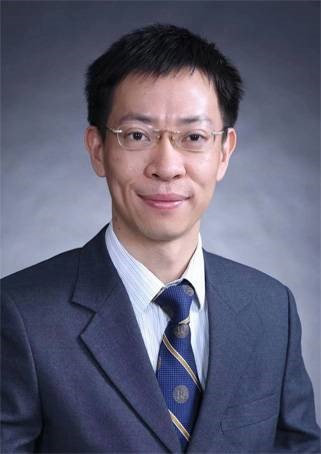
Miao-jie Yu is the Deputy Party Secretary and President of Liaoning University. He is a Fellow of the International Economic Association, a Changjiang Scholar Distinguished Professor, a recipient of the National Science Fund for Distinguished Young Scholars, an Outstanding Young Scientist of Beijing, and a Boya Distinguished Professor at Peking University. He currently serves as a Deputy to the 14th National People's Congress, a Special Supervisor for the National Commission of Supervision, and an Associate Editor of the top international economics journal Economic Journal. He enjoys the Special Government Allowance from the State Council. He is a highly cited economist ranking in the global top 1% in economics and management, and the only Chinese scholar to date to have received the "Royal Economic Society Prize."

Tariq H. Malik is a Professor who holds a Ph.D. in Management from the University of London, UK. He serves as the Director of the International Center for Organization and Innovation Studies (ICOIS) at the Business School of Liaoning University. His research primarily focuses on innovation and technology policy within the fields of organization and management. He has published articles in journals such as Research Policy and International Business Review. He was a visiting scholar at the University of London, UK, from 2011 to 2013 and at King's College London, UK, from 2012 to 2014. He also serves as an anonymous reviewer for journals including Academy of Management Journal, International Business Review, and R&D Management.
Original Link: https://maipdf.cn/file/dt697721d6ce9c5/pdf
QR Code for Reading: