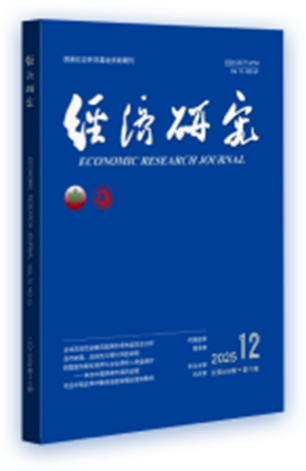
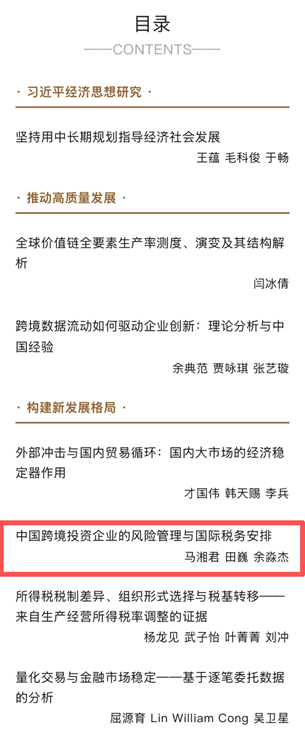
Recently, the cooperative paper "Risk Management and International Tax Arrangements of Chinese Cross-Border Investment Enterprises" by Professor Yu Miaojie, President of Liaoning University, Professor Ma Xiangjun, Deputy Dean of the China Economic Research Institute at Liaoning University, and Associate Professor Tian Wei from the Department of Economics at Peking University was published in Issue 12, 2025 of Economic Research Journal.
Paper Introduction
The profit-shifting practices of multinational enterprises through related-party transactions to low-tax jurisdictions erode government tax bases. Under the current international taxation system, one common method for profit shifting involves transferring operational risks associated with related-party transactions to low-tax jurisdictions. Following the transfer pricing principle that risk should align with profit, profits are consequently shifted accordingly. This study is the first to utilize Chinese micro-level enterprise data to examine risk-transfer behaviors among China’s cross-border investment enterprises. The findings reveal that when the corporate income tax rate differential between China and the host country (or region) increases by 10%, operational risks are shifted to low-tax foreign subsidiaries, while the risks retained by the Chinese parent company decrease by an average of 12.8%. This effect is only significant among enterprises with higher operational risks, such as those related to R&D, market dynamics, inventory, and credit. Furthermore, this paper comprehensively estimates the scale of tax avoidance by China’s cross-border investment enterprises across all host locations (including non-tax havens). It calculates an annual corporate income tax loss for the government ranging from approximately 53.4 billion to 59.2 billion yuan. Compared with developed countries, this loss represents a relatively lower proportion of the corporate income tax base.
Journal Introduction
Economic Research Journal, founded in 1955, is a comprehensive journal of economic theory. It is sponsored by the Institute of Economics, Chinese Academy of Social Sciences (CASS), and administered by CASS. Guided by Marxism, the journal is dedicated to advancing and enriching the study of socialist political economy with Chinese characteristics. It focuses on China’s realities, upholds academic rigor, contemporaneity, innovation, and frontier perspectives, and is committed to publishing high-level theoretical research on significant practical issues in the development of the socialist economy with Chinese characteristics. It faithfully serves economic theorists, policymakers, and all sectors of society, striving to contribute to the construction of the disciplinary, academic, and discursive systems of economics with Chinese characteristics.
Authors Profile
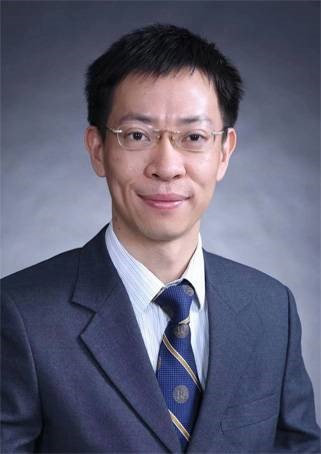
Yu Miaojie, Deputy Secretary of the Party Committee and President of Liaoning University. He is a Fellow of the International Economic Association, a Distinguished Yangtze River Scholar Professor, a recipient of the National Science Fund for Distinguished Young Scholars, and an Outstanding Young Scientist of Beijing. He also holds the title of Boya Distinguished Professor at Peking University. Currently, he serves as a deputy to the 14th National People's Congress, a special supervisor for the National Commission of Supervision, and an associate editor of the internationally top-tier economics journal Economic Journal. He receives special government allowances from the State Council. As an economist, his work ranks among the top 1% most cited in the fields of economics and management globally. He is also the only Chinese scholar to date to have received the "Royal Economic Society Prize."

Ma Xiangjun is a professor and doctoral supervisor at Liaoning University, serving as the Deputy Dean of the China Economic Research Institute at Liaoning University and the Vice President of the Liaoning International Taxation Research Association. She holds a Ph.D. in Economics from the University of Virginia and a Bachelor’s degree from Renmin University of China. Previously, she worked as an Associate Professor at the University of International Business and Economics, a Tax Transfer Pricing Economist/Manager at Deloitte (Silicon Valley Office, USA), a Visiting Scholar at the National School of Development at Peking University, and a seconded official at the World Trade Organization Department of the Ministry of Commerce. Her research focuses on international trade, international taxation and multinational corporations, political economy, applied microeconomics, and related fields. Her work has been published in top international journals such as the *Journal of International Economics*. She has served as the sub-project leader for a major National Social Science Fund project and has led a National Natural Science Foundation Youth Project and a Beijing Social Science Fund Youth Project. She has received several awards, including the Second Prize and Best Teaching Plan Award in the Beijing Young Teachers' Teaching Competition, the First Prize in the Undergraduate Teaching Achievement Awards at Liaoning University, the Outstanding Teaching Award at the University of International Business and Economics, the First Prize in the Young Teachers' Teaching Competition, and the Third Prize in the Micro-course Competition.

Tian Wei is a tenured associate professor in the Department of International Economics and Trade at the School of Economics, Peking University. His research focuses on trade liberalization, import and export enterprises, and foreign direct investment. His research papers have been published in prominent academic journals both domestically and internationally, including Economic Research Journal, Management World, The Journal of World Economy, Economic Journal, The World Economy, and Journal of International Financial Markets, Institutions & Money, among others. His research achievements have been recognized with awards such as the "An Zijie" International Trade Research Award. He is also the author of the monograph Outward Foreign Direct Investment of Chinese Enterprises.

