Speaker: Professor Liang Hao (Nanyang Business School, Nanyang Technological University, Singapore)
Host: Assistant Professor Yu Li (Li Anmin Institute of Economic Research, Liaoning University)
Guest: Assistant Professor Wen Hui (Li Anmin Institute of Economic Research, Liaoning University)
Time: November 16, 2026 (Monday), 9:30–11:00 (Beijing Time)
Venue: Room 483, Economics Division Building, Puhe Campus, Liaoning University
Language: Chinese/English
Abstract:
Achieving a green transformation of the economic system requires not only financing enterprises and projects that are already "green," but also pushing high-carbon, "brown" industries to change their existing business models. However, a long-standing controversy persists: should capital markets promote the transformation of high-carbon enterprises by raising their financing costs, or should they ease their financing constraints through "transition finance" and provide the necessary capital support for green transformation?
Using information on main business revenue disclosed in the annual reports of Chinese listed companies, this study constructs a new database of firms' green, brown, and neutral business revenue, measuring green transformation from the perspective of changes in firms' revenue structure and business models. The study finds that lower debt financing costs significantly increase the greenness of firms' revenue structure, and this effect is concentrated mainly in brown industries; the transformation effect is particularly pronounced for firms that are smaller, possess more green technologies, and receive green subsidies. To further identify causal relationships, the study constructs shift-share (Bartik) instrumental variables using firms' existing exposure to different banks and changes in bank loan pricing, and conducts tests in combination with two policy shocks: China's green finance reform and innovation pilot zones and the accelerated depreciation of fixed assets policy. Different identification strategies all indicate that a decline in financing costs prompts brown firms to reduce brown business and increase green business, thereby driving substantive transformation of firms' business models. Further analysis finds that a higher share of green business revenue is associated with improved firm profitability, lower environmental costs, and sales growth; a decline in financing costs is also accompanied by more green investment and green products. An analysis based on a global sample of firms likewise finds that lower capital costs are associated with a higher share of revenue eligible under the EU Taxonomy.
This study shows that the role of green finance may lie not only in "rewarding green and punishing brown" through capital reallocation, but also in providing financing conditions for the real transformation of brown industries. The study provides micro-level empirical evidence for the core logic of transition finance and offers policy implications for how to coordinate green finance policy, industrial policy, and corporate transformation incentives.
Speaker Profile:
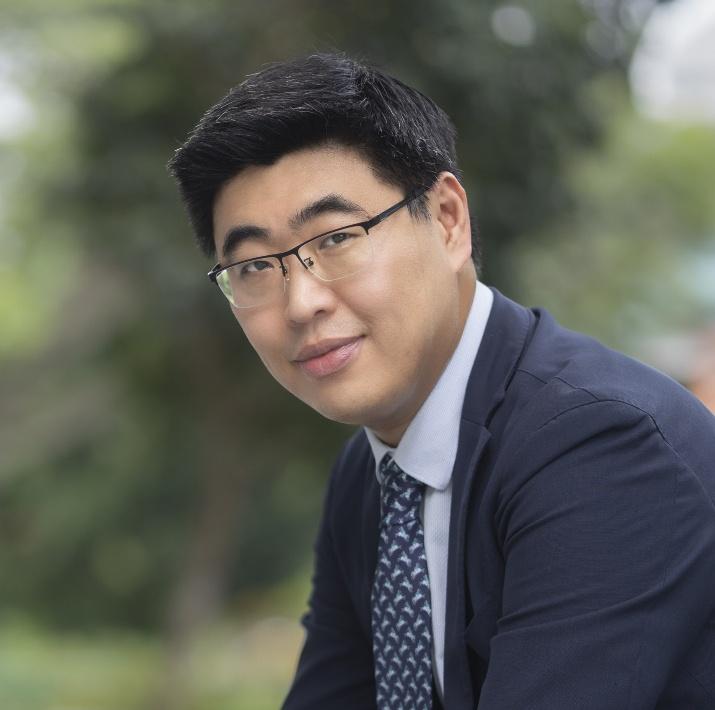
Professor Liang Hao is currently at Nanyang Business School, Nanyang Technological University, where he serves as President's Chair Professor in Finance, Founding Director of the Global Business Influence Institute, and Director of the CEO Program. Previously, he was the Ho Bee Professor in Sustainability Management and Professor of Finance at the Lee Kong Chian School of Business, Singapore Management University, as well as Academic Director of the Singapore Green Finance Centre (a national-level centre), Lee Kong Chian Distinguished Scholar, DBS Sustainability Distinguished Scholar, BNP Paribas Distinguished Scholar, and Director of the Finance PhD Program.
Professor Liang Hao is also a member of the European Corporate Governance Institute, an external fellow of Tilburg University, a board member of the Global Research Alliance for Sustainable Finance and Investment (GRASFI) and the Alliance for Research on Corporate Sustainability (ARCS), a member of the Steering Committee of the Global Alliance of Teachers in Impact and Sustainable Investing, a member of the Academic Committee of the Geneva Centre for Philanthropy, a member of the ESG Advisory Group of the World Federation of Exchanges, a member of the Singapore Sustainable Finance Standards Technical Committee, a member of the Global Steering Committee of Erte Digital Technology, and a member of the Expert Advisory Committee of the Xiangmihu Women Directors Initiative Alliance. He was formerly a visiting scholar and member of the Corporate Governance Program at Harvard Law School.
Professor Liang Hao's research interests include corporate finance, corporate governance, sustainable finance, and international business, and encompass topics such as ESG, impact investing and measurement, climate finance, and biodiversity finance. He has published papers in top international academic journals such as the Journal of Finance, Journal of Financial Economics, Journal of Financial and Quantitative Analysis, Review of Finance, Journal of International Business Studies, Management Science, Organization Science, Journal of Business Venturing, and Proceedings of the National Academy of Sciences (PNAS). He currently serves as Finance Section Editor of the Journal of Business Ethics, and as Associate Editor and Editorial Board Member of several important academic journals, including Management Science, British Accounting Review, Asia-Pacific Journal of Financial Studies, Journal of Business Research, Strategic Management Journal, and Journal of Banking and Finance.

