Speaker: Professor Dai Liang (The Chinese University of Hong Kong, Shenzhen)
Host: Assistant Professor Yu Li (Li Anmin Institute of Economic Research, Liaoning University)
Guest Introduction: Professor Tian Jianrong (Li Anmin Institute of Economic Research, Liaoning University)
Time: Friday, October 30, 2026, 10:00–11:30 (Beijing Time)
Venue: Meeting Room 483, Economics Division Building, Puhe Campus, Liaoning University
Language: Chinese/English
Abstract:
We develop a dynamic contracting framework to study how partial commitment power affects long-term employment relationships. In a continuous-time moral hazard model, the principal can alter the contract at random, exogenously timed "alteration opportunities," with the arrival rate measuring her (lack of) commitment power. Our results depend on the relative observability of the agent's diligence and misconduct. For guardian jobs, where misconduct is easier to observe, it is optimal to offer a static, permanent contract that pays fixed performance bonuses for observed diligence and remains immune to reductions in commitment power. For entrepreneurial jobs, where diligence is easier to observe, the optimal structure features an initial probation period, a promotion bonus upon achieving permanence, and a return to probation at each alteration opportunity. In this case, weaker commitment can, under certain conditions, improve welfare; if commitment power is already low, further reductions may yield Pareto improvements. Reduced commitment power also raises required promotion and performance bonuses, shortens probation, and accelerates the decline in promotion bonuses over time.
Author Profile:
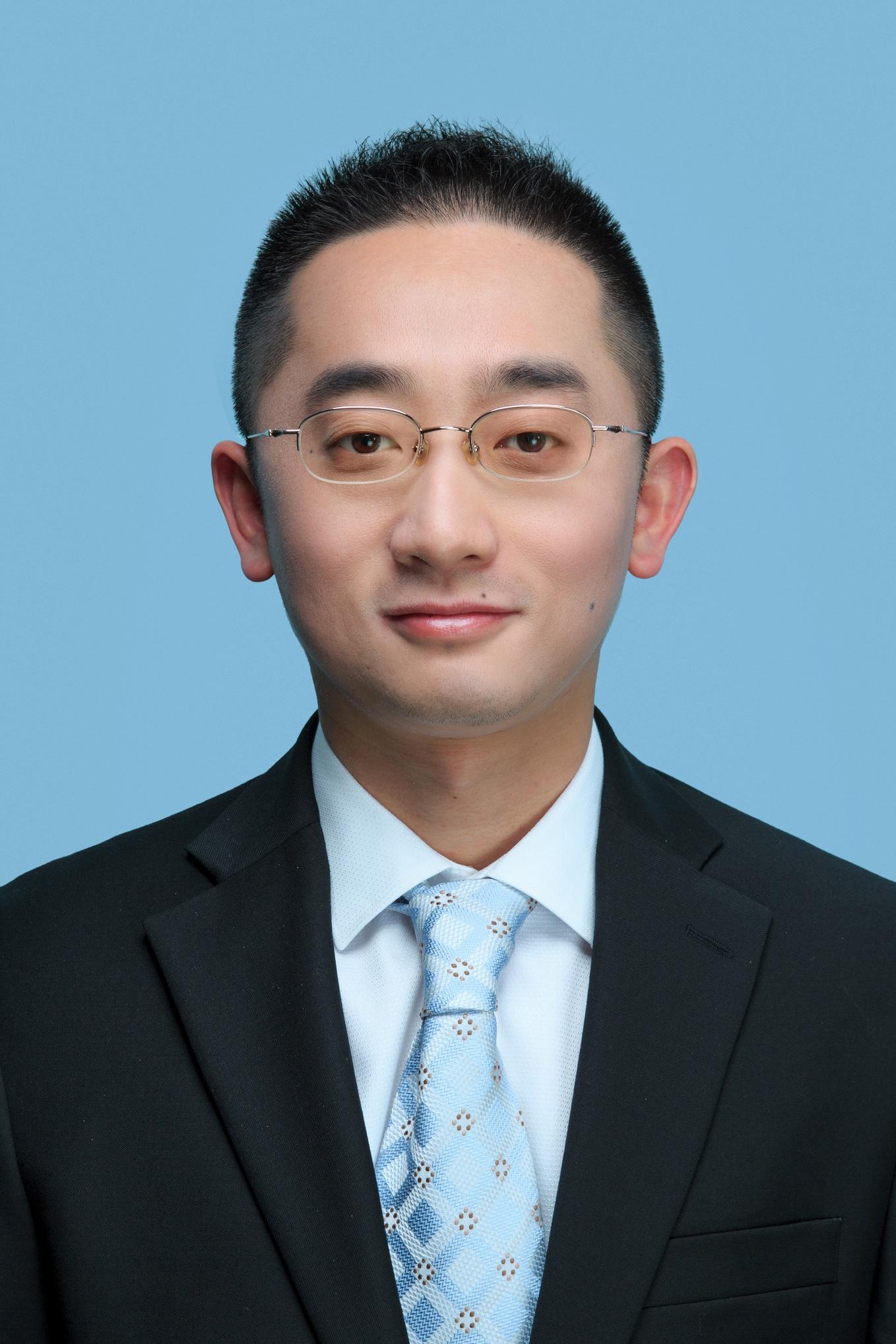
Dai Liang is an Assistant Professor at The Chinese University of Hong Kong, Shenzhen. He received his Ph.D. in Economics from Princeton University in 2015. From 2015 to 2023, he taught at Antai College of Economics and Management, Shanghai Jiao Tong University, where he served successively as Assistant Professor and Associate Professor. Since October 2023, he has been an Assistant Professor at the School of Economics and Management, The Chinese University of Hong Kong, Shenzhen. His main research interests are microeconomic theory and finance. His research has been published in internationally leading journals such as the Journal of Economic Theory and the Review of Financial Studies. He is the principal investigator of a General Program project funded by the National Natural Science Foundation of China.

