Speaker: Professor Nam Seok Kim Korea Institute for International Economic Policy (KIEP)
Host: Assistant Professor Xiong Zeyuan (Institute of Chinese Economy)
Guest Introduction: Assistant Professor Xiong Zeyuan (Institute of Chinese Economy)
Time: Friday, January 16, 2026, 10:00–11:30 (Beijing Time)
Location: First-floor Meeting Room, Wuzhou Garden, Chongshan Campus, Liaoning University
Online Access: Tencent Meeting ID 962-251-737
Language: English
Abstract:This paper studies how individual exposure to the Global Value Chain (GVC) explains trade barrier preference. Using the cross-country individual-level survey data, we calculate the degree of exposure to GVC for every respondent. We show that GVC exposure significantly explains individual attitudes towards protectionist trade policy. However, the marginal effect of exposure to GVC differs according to the national income level and factor endowment of respondents’ countries. In a high-income (capital-abundant) country, respondents with more exposure to GVC prefer a lower trade barrier. However, in a low-income (labor-abundant) country, individuals who are more exposed to GVC prefer a higher trade barrier. These findings add the dimension of GVC to the existing stylized facts. As economic agents face heterogeneous gains from trade, they also face heterogeneous welfare gains from participating in GVC. Our estimations confirm that this heterogeneity is reflected in individual opinions on trade policy. As the political economy of trade policy has become more pivotal in forming election coalitions and political cleavage, our estimation results resonate with the importance of policy coordination, which can relieve the inequalities caused by GVC participation.
Speaker Profile:
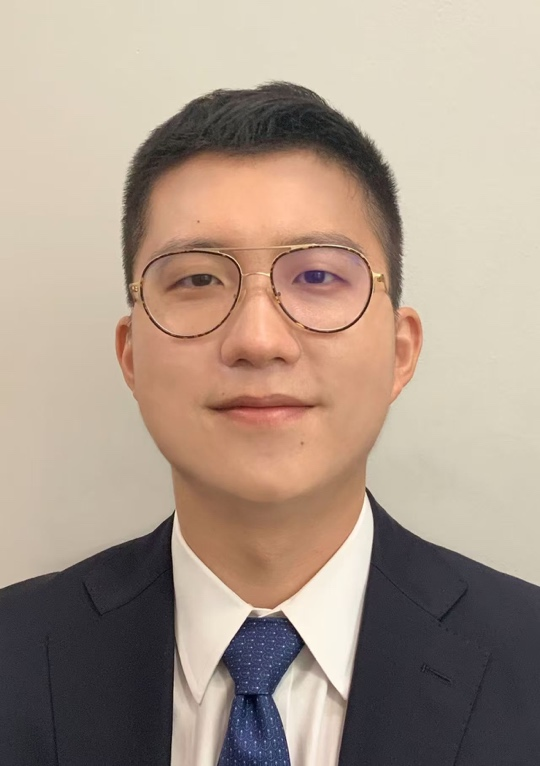
Nam Seok Kim is Head of the Southeast Asia and Oceania Team and a Senior Research Fellow at the Korea Institute for International Economic Policy (KIEP). He also serves as an Adjunct Professor in the Division of Global Culture and Business at Hanyang University. He earned his Ph.D. in Economics from Syracuse University, USA, in 2022. His research interests encompass international trade, political economy, economic growth, and the economies of Southeast Asia. He has published multiple papers in academic journals in the field of international economics, including Asian Economic Papers and the Journal of Economic Behavior & Organization. As a member of a South Korean government think tank, he has participated in and completed numerous policy consultation and government projects. His research primarily focuses on globalization, structural change, and voter protectionism. He currently serves on the editorial board for Springer Nature Business and Economics and acts as a reviewer for several international academic journals.

