主讲人:蒋雅婷助理教授(中国人民大学经济学院)
主持人:熊泽源助理教授(辽宁大学中国经济研究院)
嘉宾介绍:马湘君教授(辽宁大学中国经济研究院)
时间:2026年11月27日(周五) 10:00-11:30(北京时间)
线下地点:辽宁大学蒲河校区经济学部大楼483会议室
线上参会:腾讯会议|会议号:560-254-425
会议链接:https://meeting.tencent.com/dm/lVz4NAB1ULwD
语言:中文/英文
摘要:Selling in a foreign market is hard: a firm must build a customer base from scratch, earn a reputation, and learn unfamiliar demand. Consistent with this, new exporters typically enter small and expand only gradually. This pattern is hard to reconcile with models whose only friction is a fixed entry cost. We argue that firms face substantial demand barriers abroad. We study how they overcome demand barriers by investing in marketing. Using firm-market-specific price and quantity data from the Chinese textile industry, we separate a firm's demand advantage from its physical productivity and measure directly how marketing shapes demand. Reduced-form facts suggest that firms ramp up marketing sharply upon entry, and marketing raises sales in both markets through higher quantities rather than prices. We then estimate a dynamic model of export and marketing decisions with demand accumulation. Demand heterogeneity, rather than productivity, accounts for most sales variation (76.5% of export-sales variation versus 9.5% for productivity), and marketing raises demand in both markets while leaving markups largely unchanged. A counterfactual that sets new exporters' initial export demand to its steady-state level shows demand barriers are first-order: removing them would raise their first-year export sales by about 72%, with the gap still around 37% by their sixth year. Marketing plays a central role in overcoming demand barriers: shutting down the marketing channel more than doubles the exit rate of young exporters and reduces survivors' export sales by 10 to 21% over their first six years.
主讲人简介:
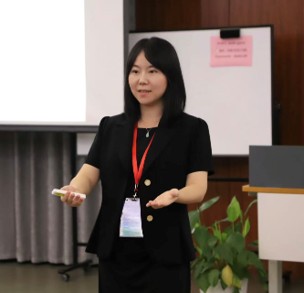
蒋雅婷,中国人民大学经济学院助理教授,2023年获香港大学经济学博士学位,同年入选中国人民大学“青年英才”人才计划。主要研究领域为实证产业组织、国际贸易与应用微观经济学,研究聚焦企业竞争力,涵盖需求侧优势、供给侧效率、市场势力及相关产业与贸易政策,注重结合结构化建模与简约化分析。研究成果发表于The Review of Economics and Statistics,主持国家自然科学基金青年科学基金项目和中国人民大学青年基金项目。

